 The Shoe Capital
A Rose, A Child, and the World
After all, rights begin not when a child turns eighteen, but the moment the world decides that their voice matters.

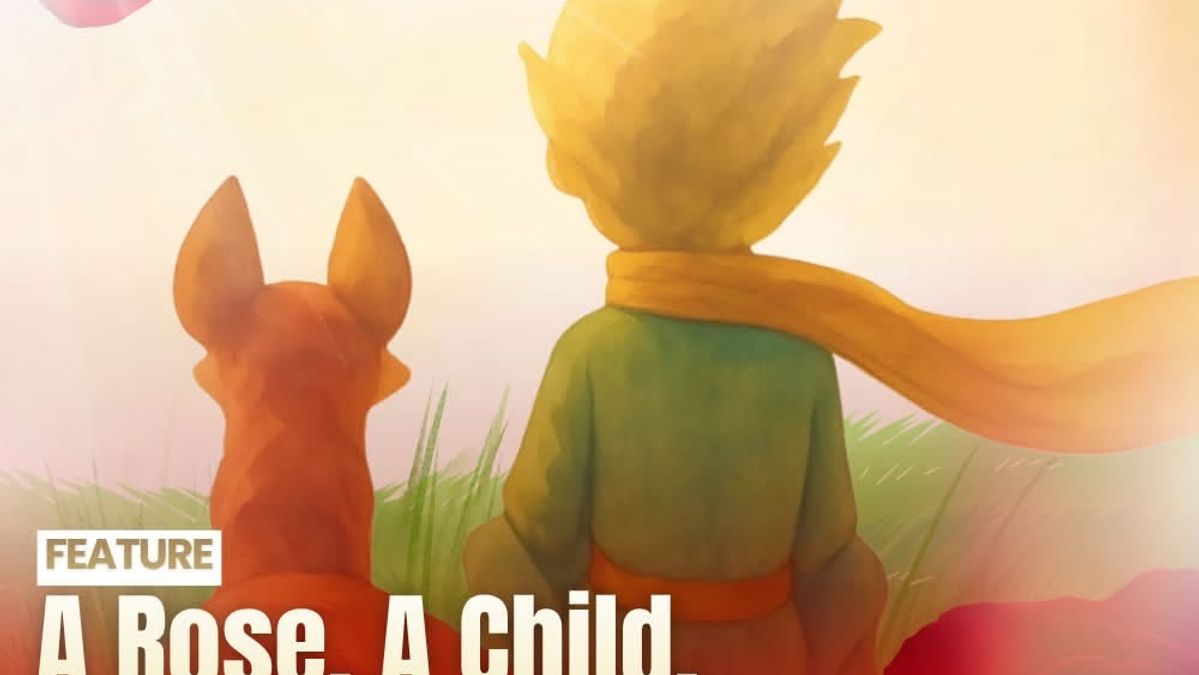
𝗙𝗘𝗔𝗧𝗨𝗥𝗘 | 𝗔 𝗥𝗼𝘀𝗲, 𝗔 𝗖𝗵𝗶𝗹𝗱, 𝗮𝗻𝗱 𝘁𝗵𝗲 𝗪𝗼𝗿𝗹𝗱
It is only with the heart that one can see rightly.
Children have never asked to be the center of the world. They have only asked to be seen—not merely with watchful eyes, but with listening hearts.
Somewhere between bedtime stories and board meetings, adulthood develops a peculiar talent: hearing children’s voices without truly listening to them. We ask what grade they received before asking how they are. We praise quietness as if silence were always a virtue. Then we wonder why so many young people grow up believing that being heard is a privilege instead of a right.
When French author and aviator Antoine de Saint-Exupéry introduced the Little Prince in 1943, he was not simply writing about a boy from a tiny asteroid. He was quietly exposing a much larger world, a world where grown-ups count stars only if they can own them, admire flowers without stopping to smell them, and measure success by numbers while overlooking the people behind them. More than eighty years later, the story reads less like fantasy and more like an uncomfortable mirror.
That reflection becomes clearer today. The United Nations Convention on the Rights of the Child recognizes every child’s right to express their views in matters affecting them. Yet recognition on paper does not always become recognition in practice. Across homes, schools, and communities, many children are still expected to obey before they are understood, to remain quiet before they are comforted, and to grow up before they are allowed to be children.
The United Nations Children’s Fund has repeatedly emphasized that children thrive not only through access to education, healthcare, and protection, but also through meaningful participation in decisions that affect their lives. Listening to children is not an act of indulgence—it is an investment. Every opinion acknowledged builds confidence. Every concern addressed nurtures trust. Every dream encouraged becomes another reason for hope to outgrow fear.
Perhaps that is why the Little Prince chose questions instead of speeches. Children rarely arrive carrying polished arguments or lengthy explanations. They arrive with curious eyes, endless “whys,” and the courage to wonder about things adults have long stopped noticing. Somewhere along the way, many of us mistake innocence for ignorance. Yet history has shown that some of humanity’s greatest changes began with someone daring to ask a question others thought too simple.
It is tempting to believe that protecting children means giving them stronger walls. Yet walls alone cannot shelter a child whose voice never reaches the people standing beside them. A child’s greatest refuge is not silence but safety, the kind that allows them to speak honestly without fear of ridicule, dismissal, or punishment. When adults listen with patience rather than authority alone, they do more than solve today’s problems; they shape tomorrow’s citizens, leaders, artists, scientists, and dreamers.
The Little Prince eventually returned to his star, but perhaps he left behind the very thing this planet needed most: a reminder that the smallest voices often carry the greatest truths. We do not preserve childhood by deciding everything for children. We preserve it by making room for their laughter, their questions, their fears, and even their disagreements. After all, rights begin not when a child turns eighteen, but the moment the world decides that their voice matters.
Maybe the problem was never that children had too little to say. Maybe it was that adults became too busy counting stars to notice the one standing quietly beside them. And perhaps the greatest lesson hidden among planets, roses, and foxes is this: the future has never asked us to speak for it. It has only asked us to listen while it is still young enough to believe that someone will.
Discussion
Join the Conversation
You must be logged in to leave a comment.